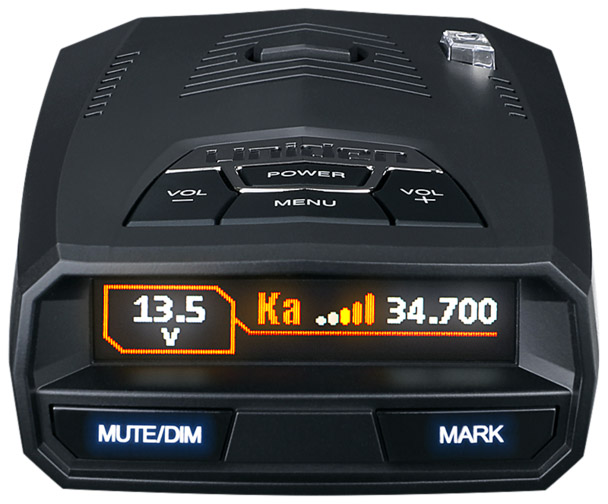
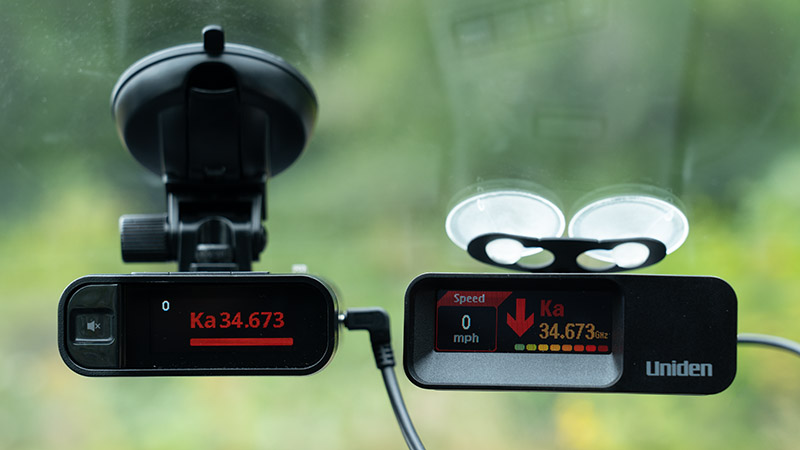
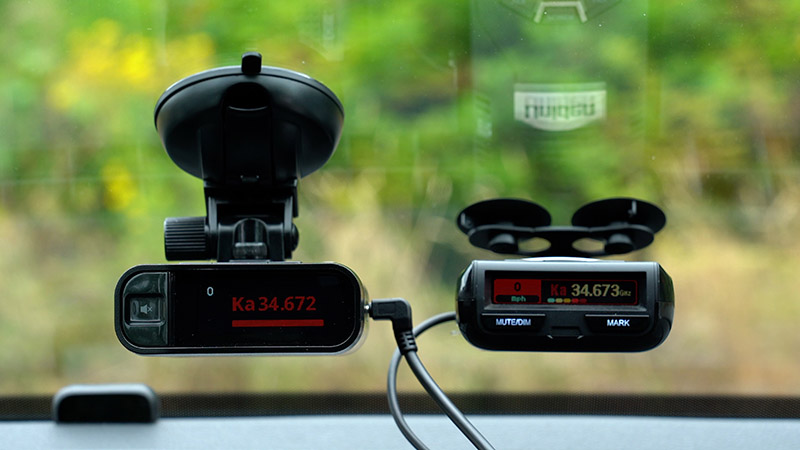
The brand new Uniden R4 ($449) is now available for pre-order. It builds upon the R4 offering even longer range, improved false alert filtering, a refreshed design, and a bunch of useful new features. You can think of it as an R3 on steroids.
I’m a fan of this new R4. Let’s take a look at its improvements over the R3.
Disclosure: This is not a paid or sponsored review. Uniden sent me an R4 earlier for test and review. It’s a pilot production sample (same hardware as retail copies) and I’ve tested with both beta and public firmware. I make a percentage when you purchase using the affiliate links in this article. It supports me and allows me to continue doing tests and reviews like this for you.
This update brings a number of nice improvements to the V1, but it also introduced an annoying issue too. Here’s what you need to know about this latest update.
Yesterday I went out to do some testing with the new MaxCam 360c. Escort says it performs better than the Max 360c, but not quite as good as the Redline 360c, so I was curious to test and verify. Additionally I was curious if we finally have a radar detector / dashcam combo unit that, for the first time, uses a good radar detector.
So after posting my initial test results with the Radenso DS1 where it did great, people had a bunch of questions and I did too. Was its performance a fluke? Does it perform well on all bands? What if it only did well on that last course? Did traffic give the DS1 an unfair win? Are the results repeatable?
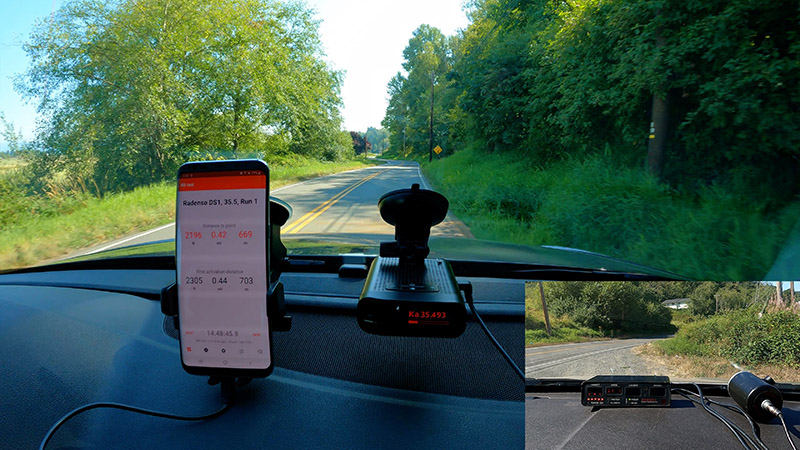
Either way, I really wanted to get some more test results in, especially before launch so that we can all have a better understanding of how it performs. For that reason I headed back to the red barn course and spent the day running the DS1 against some of the competition, a reduced number of detectors this time so I could 33.8, 34.7, & 35.5. Traffic was light, weather was sunny, and temps were 69-75F throughout the day.
I recently posted a comparison of the Radenso DS1 and Uniden R3. A lot of people have been asking how the Radenso DS1 compares to the Uniden R7. However, I personally consider the non-arrow DS1 in a different class than arrow detectors like the R7. Arrows are a very useful feature and many people wouldn’t even consider a detector without them.
However, given that the DS1 and R7 are both long range detectors that improve upon the R3’s platform and share similar features like autolockouts and a large display, let’s run through how they compare in case you’re curious too.
The new Radenso DS1 builds upon the same platform as the popular Uniden R3. The DS1 features some improved hardware and new features missing from the R3.
While I’m playing with the DS1 (will be available starting Sept 1st), I’ve been mentally comparing it head-to-head with the R3 and taking note of the main differences. Here’s the main advantages I’ve found with each detector so far:
The Radenso DS1 (purchase here) comes with a bunch of settings and options to let you customize the detector.
Let’s go over how to use the detector including what the buttons on the detector do and how to tweak your settings to optimize its performance and false alert filtering.
You can update the settings directly in the detector, or via the Radenso Nexus Android app. Radenso has not released a native iOS app.
So you know that big 34.7 shootout I posted recently? Well the real reason for that test was to do a little beta testing. 😉 I also brought along an unreleased Radenso DS1 and it turns out it’s looking like a beast.
The Radenso DS1 is a single antenna detector (so no arrows) and it features a very impressive level of sensitivity.
This weekend I set out to test a bunch of radar detectors in a very difficult situation we encounter up here in Washington: officers hiding behind a bend shoot radar with trees blocking long range detection. The test course we set up was very challenging and helped separate higher end detectors from the weaker detectors.
Cobra and Escort radar detectors have the ability to share police spotted alerts with one another in realtime. Cobra now offers a lineup of cloud-based dashcams like the Cobra SC 200D ($199) that can also tap into that network, providing realtime police spotted alerts and help drivers stay protected.
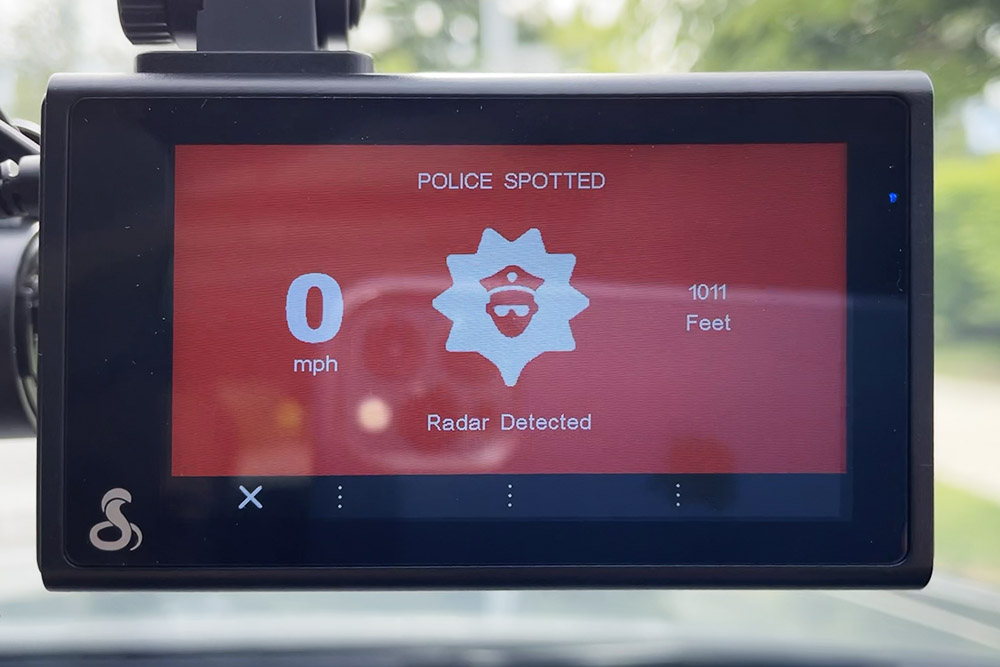
Cobra SC 200D alerting to police radar spotted ahead via iRadar
I’ve spent the past few weeks testing the Cobra SC 200D. In some ways it’s a surprisingly good dashcam, despite it being a Cobra. In other ways though, there’s some pretty unfortunate limitations.
The two main questions I have that I want to focus on in this review are:
How effective is the SC 200D as a countermeasure?
How good is the dashcam itself overall?
Full Disclosure: I’m testing a dashcam that Cobra provided me for free for review purposes. I’m not being paid for this review and am free to share my exact thoughts, good and bad, without Cobra having any control on what I say. If you purchase one using the affiliate links in this review, I earn a percentage. This is a pretty in-depth review, as usual, and you’re reading my thoughts at the same time as Cobra.

 The
The