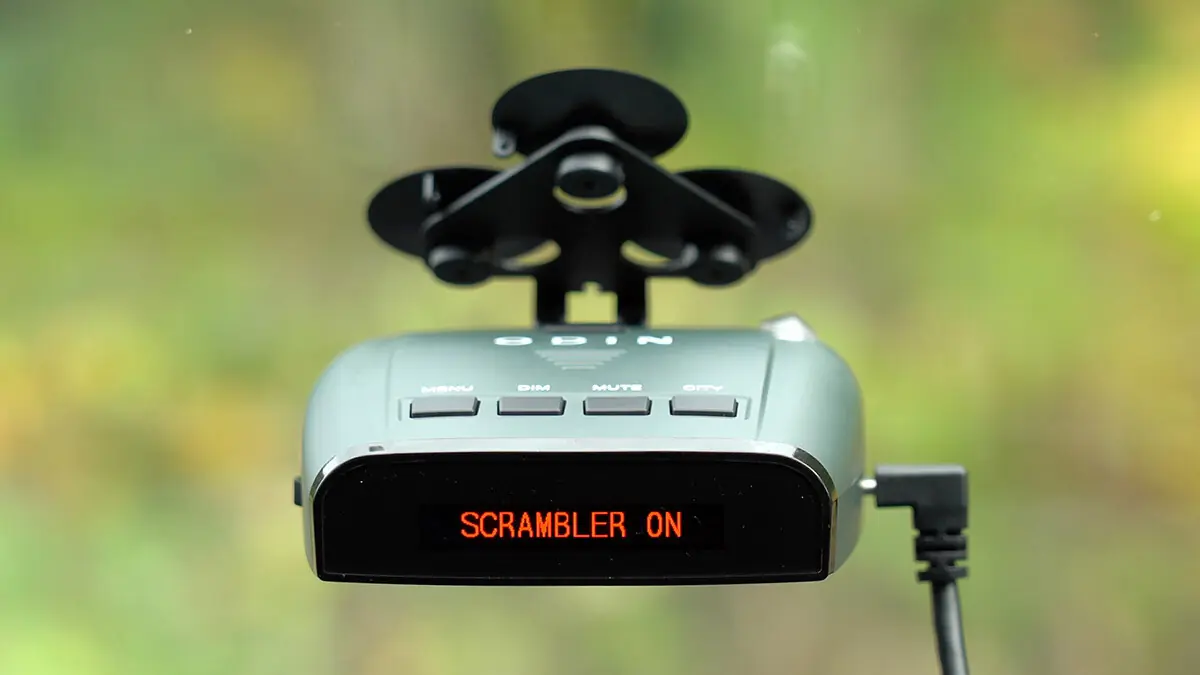
Rocky Mountain Radar is one of the biggest scammers in the radar detector industry. They sell products with wild claims, primarily that their detectors can “scramble” police radar and laser guns, preventing officers from getting your speed. They dress this up in technical-sounding language designed to confuse buyers who don’t know any better.
The Odin 2.0 is their latest detector. It retails for $399. The original Odin and the Odin 2.0 share the same fundamental architecture, but the 2.0 claims improvements to laser detection and false alert filtering. My testing was done on the original Odin. None of those changes address the scrambling, POP detection, Spectre immunity, or radar performance issues documented in this review.
What Is the Odin 2.0?
The original Odin, released back in 2021, was the successor to the Rocky Mountain Radar Judge 2.0. Under the hood it had the same platform with the same performance and the same basic feature set. The main additions were a new gray case (compared to the Judge’s black), a USB-C power port instead of a barrel connector, and Bluetooth connectivity with a companion app. In late 2025, RMR released the Odin 2.0, advertising improvements to the laser array, lens, and processor, raising the price from $300 to $400.
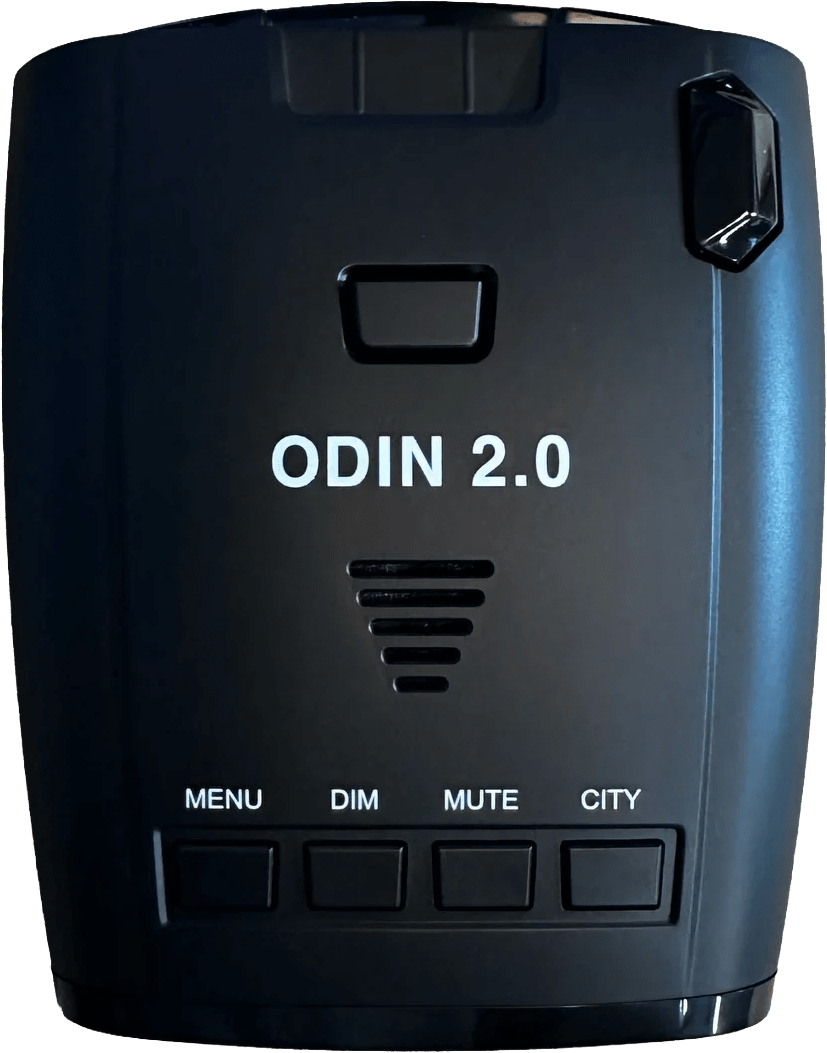
RMR’s marketing pitch is that the Odin detects and “scrambles” police radar and laser guns, claiming it can prevent officers from getting your speed. Their own FAQ has since walked that back considerably. Let’s see how it holds up to testing.
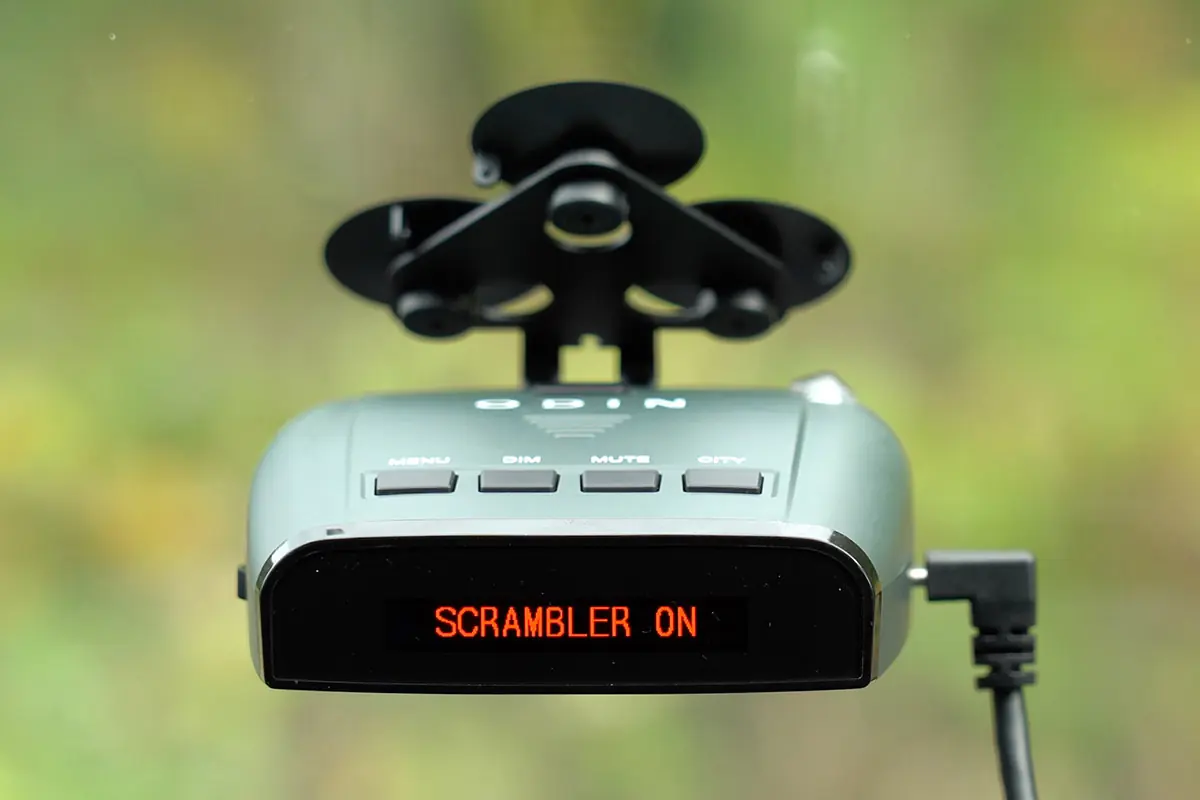
Radar Scrambling
RMR’s original claim was that the Odin made your car invisible to police speed detection equipment. They’ve since quietly walked that back. Their FAQ now reads:
“The scrambler does not hide your speed from police radar, it does extend the time that it takes for police radar to display your speed.”
And on 360 degree scrambling coverage: “No, the scrambler is a forward scrambler.”
That’s a significant admission. They’re no longer claiming it hides your speed at all. Just that it might slow down the read slightly, and only from the front.
With the scrambling feature enabled, I tested the Odin against nine different radar guns (seven police-grade, two consumer-grade), targeting from both the front and rear.
The result: zero impact. Every gun acquired my speed immediately, exactly as if the Odin wasn’t there. No delay. No extended read time. Nothing.
There is no mechanism by which a passive device mounted on your windshield can affect how quickly a radar gun measures your speed. The physics don’t support even the weakened claim. The test results confirm it.
Laser Scrambling
Same story. Rocky Mountain Radar claims their “scramblers only allow the Lidar to see up to 100 feet, so it is unable to calculate your speed.” I tested with three police lidar guns (the LTI TruSpeed S, the Kustom ProLaser 4, and the LTI Ultralight LRB), with the Odin’s scrambling feature on and the detector mounted center-windshield as RMR recommends. I ran passes starting from 500 to 700 feet away to give the scrambler every possible chance to work.
Every gun locked on and held a speed reading with no issues, both front and rear. The Odin had zero effect on any of them.
RMR claims the scrambling works beyond 100 feet. My test course was well beyond that. It doesn’t matter. The result is the same.
POP Radar Detection
RMR claims the Odin gives you “a 100% probability of detecting POP Radar.” I tested against two POP-capable radar guns.
Detection rate: zero percent.
There’s no option in the detector to enable or disable POP detection, which is strange for any detector that claims to detect it. It just doesn’t alert. Not once.
For what it’s worth, POP detection isn’t particularly important in practice, and many enthusiasts turn POP detection off on detectors that support it. But RMR makes a specific “100%” claim. That claim is false.
Radar Detection Performance
So what about actual radar detection? Just doing the basic job of alerting you to a police radar gun up the road?
RMR confirmed the Odin runs the same platform as the Judge 2.0, so existing test data applies. @VariableWave on RDF did thorough range testing on the Judge 2.0:
- Ka 33.8: Bottom-of-the-barrel detections, front and rear
- Ka 34.7 (most common frequency): Last place
- Ka 35.5: Worst front detections, nearly nothing from the rear
- K band: Worst front detections, almost no rear detection
- X band: Worst front detections, zero rear detection
The performance is what you’d expect from a sub-$100 detector, not a $400 one.
False Alert Filtering
The Odin doesn’t have GPS, so there’s no low-speed muting, no GPS lockouts, no red light camera database. Those features are standard on competing detectors in this price range, and even on many detectors that cost significantly less.
In daily driving, the detector was quieter than I expected on K band, but that’s largely a function of the sensitivity being low in the first place. You can reduce sensitivity even further by switching to City mode, at which point the detector stops alerting to a door opener right in front of it. That’s not filtering. That’s just being deaf.
The bigger issue is Ka band false alerts.
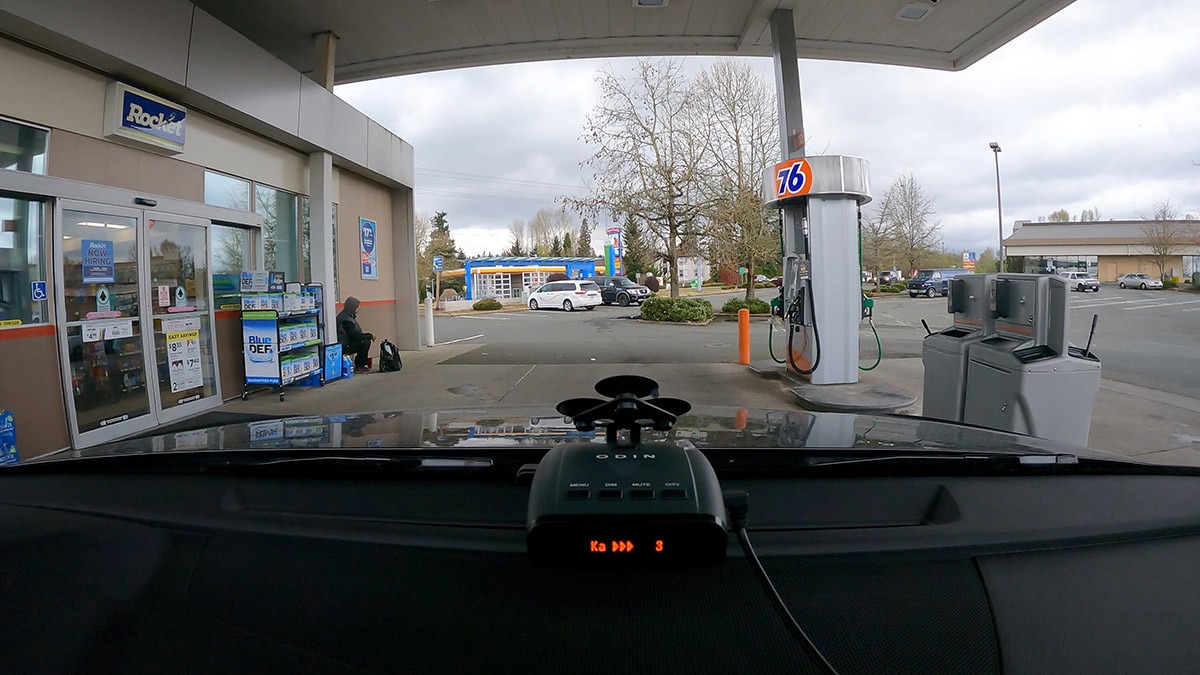
RMR Odin alerting to K Band Door Opener as Ka
I saw the Odin misreport K band signals as Ka band, repeatedly, from sources like Honda CRVs and Jeeps with blind spot monitoring. Ka alerts also appeared around speed signs, door openers, and occasionally from nothing I could identify at all. Ka band is the highest-priority alert for most drivers. Misreporting K band signals as Ka is a real problem.
Spectre RDD Immunity
RMR used to claim the Odin was “100% undetectable by the Spectre 3.” With my Spectre 3 on the windshield, I picked it up consistently from around 950 feet away. Consistent, repeatable detection.
I have noticed that for the Odin 2.0’s sales page, they say that it’s “designed to minimize detectable RF leakage” against the Spectre and explicitly still mention the Spectre III. The Odin is one of the most detectable detectors I’ve ever tested. An officer running a Spectre would have no trouble identifying a driver running one of these.
The App
⚠️ Update (2026): The Odin app appears to have been pulled from both the App Store and Google Play. RMR’s app page is now blank. The only RMR app still findable is a speedometer app last updated in 2015. The Bluetooth feature that was the Odin’s one differentiator from the Judge no longer has a working app to connect to.
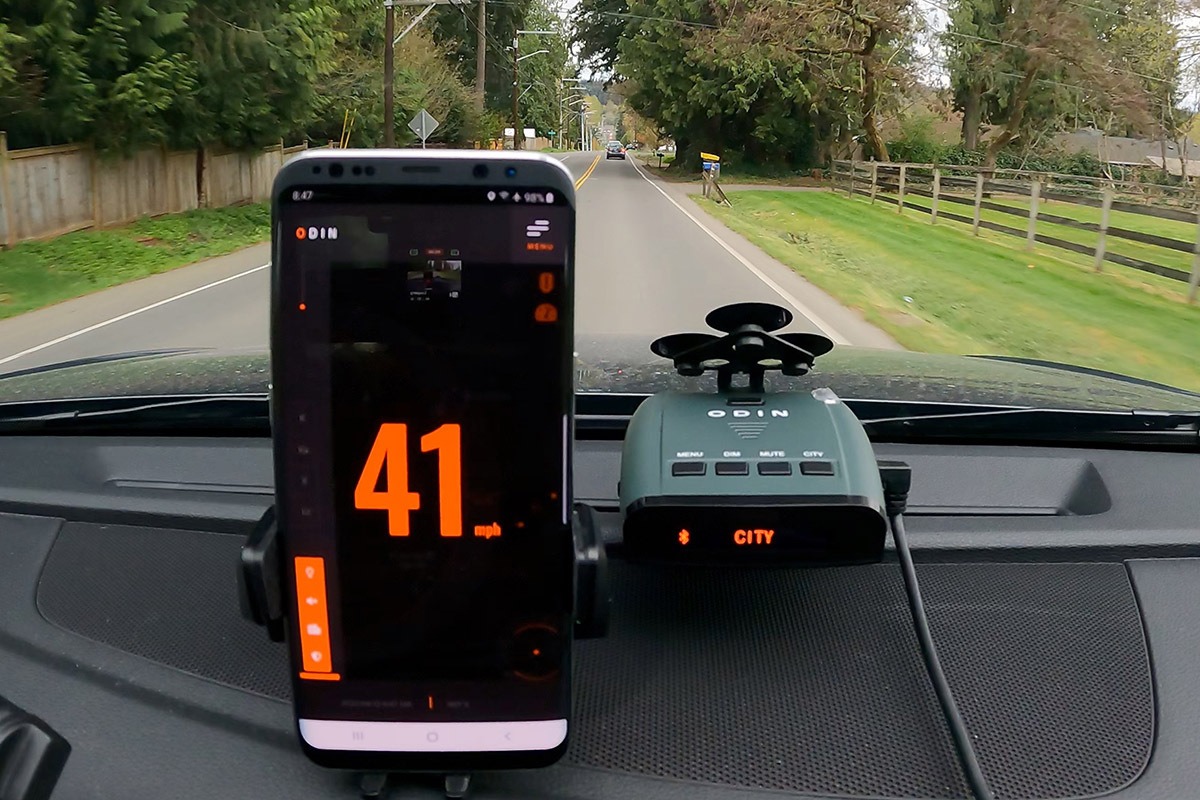 The Odin’s main new addition over previous RMR detectors is Bluetooth and a companion app. I spent time testing it.
What the app actually does did:
- Lets you change settings on the detector from your phone (bands on/off, scrambling on/off, highway/city mode, display brightness)
- Shows a speedometer using your phone’s GPS
- Has a faded map in the background showing your location
- Displays a band icon when the detector alerts (K or Ka, no frequency, no signal strength)
What the app doesn’t do:
- GPS-based low-speed muting
- GPS lockouts
- Pre-built red light camera database (you can manually mark cameras, but alerts from those marks didn’t work reliably in my testing)
- Cloud alerts that actually function in real time (the app reported dots on a map the next day, not in-the-moment alerts)
- Firmware updates
The manual camera marking and cloud reporting features exist in the app but didn’t work reliably in my testing. The minimum time filter for crowd-sourced alerts is one day, so you’re seeing where officers were yesterday, not right now. There’s also no real alert display while driving. When the detector triggers, the app shows a band icon. No signal strength. No frequency. That’s it.
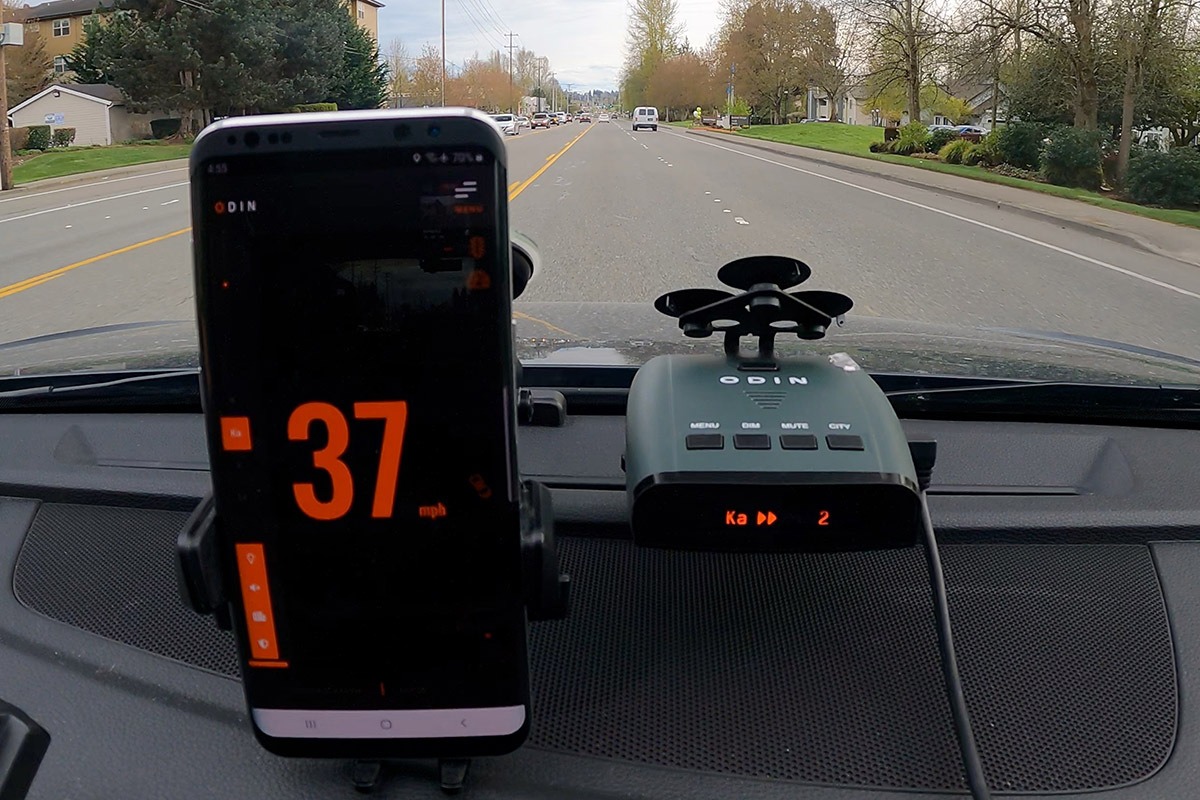
Ka Alert on the Odin with the App
The Bluetooth connection doesn’t maintain itself reliably either. Most times I got back in the car, I had to manually reconnect. For an app that doesn’t offer much while driving anyway, that’s hard to justify.
If you want crowd-sourced alerts and a red light camera database, just run Waze. Way more users, way more timely, pre-built database, actually works. The Odin app isn’t in the same league.
The app feels like it was built to check a feature box, not to provide actual value.
USB-C Power Port
One thing worth acknowledging: the Odin was the first radar detector to ship with a USB-C power port. Radenso has since done it too with the DS1. Credit where it’s due. This is a welcome direction for the industry. The included cable has a dual USB-A cigarette lighter plug, one for the detector and one for your phone. It’s power-only. No data connection, no firmware updates.
Bottom Line
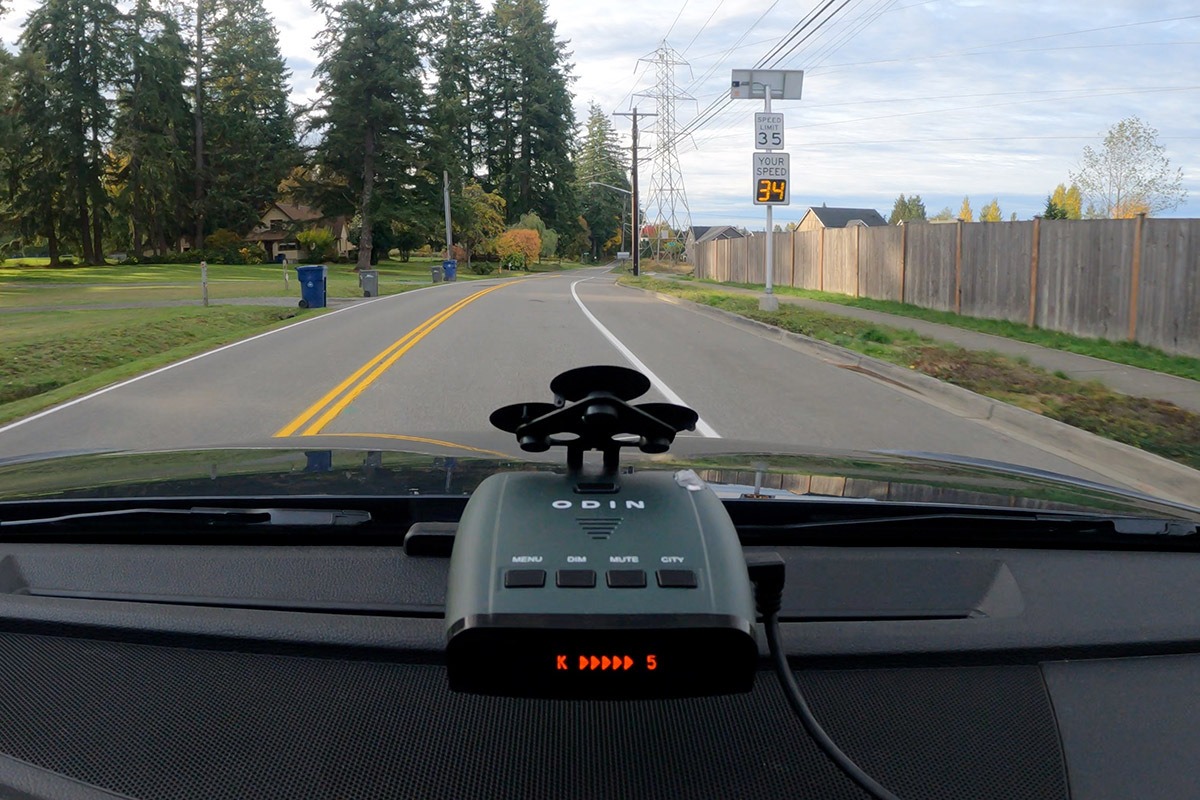
The Odin is a low-end radar detector dressed up with marketing claims that don’t hold up to testing. The scrambling doesn’t work on radar or laser. POP detection doesn’t work. The Spectre immunity claim is false. Performance is at the bottom of the class. The app adds little.
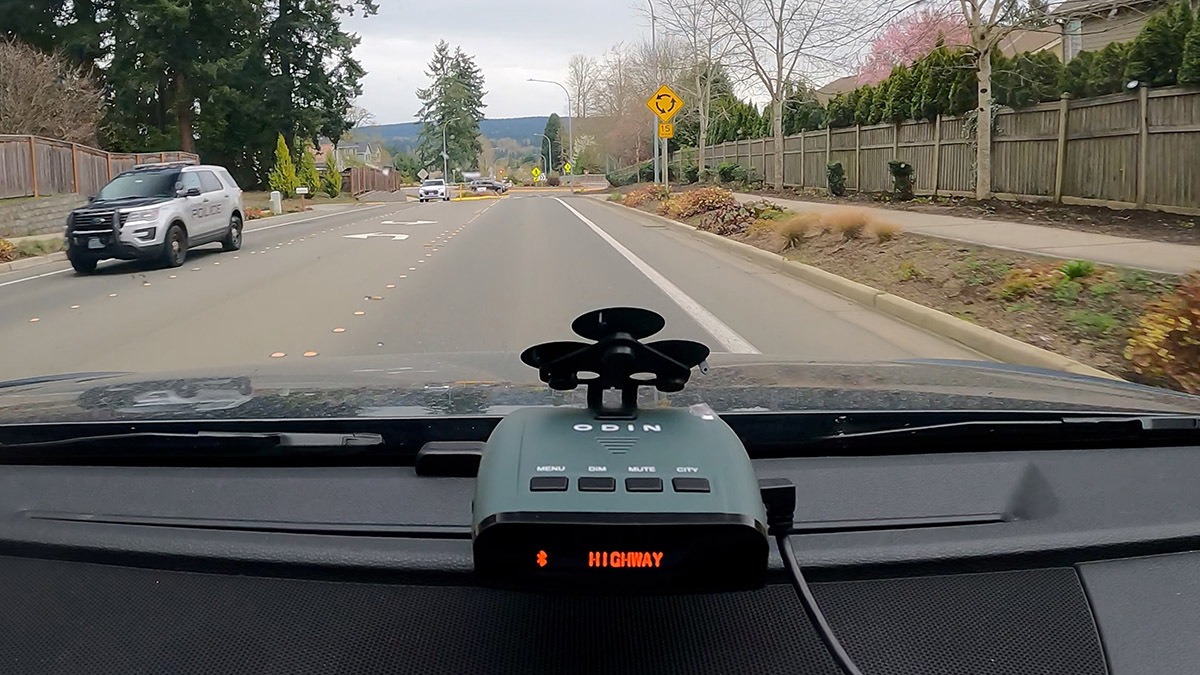
The Odin 2.0 now sells for $400, up from $300 for the original. The value proposition got worse, not better.
Think about it this way: if any of this scrambling worked, I wouldn’t need the shelves of detectors behind me or thousands of dollars of the best laser jammers professionally installed in my car. I’d just mount this on the windshield, plug it in, and be done. If it worked, we enthusiasts and professionals who test this equipment would know. We’d all be running it.
It doesn’t work.
If you want to spend $400 on a radar detector, take a look at my picks for the best radar detectors such as the Uniden R4w to find detectors that actually perform.
🚫 Do not buy the Rocky Mountain Radar Odin 2.0.
| This website contains affiliate links and I sometimes earn commissions on purchases. All opinions are my own. I don’t do paid or sponsored reviews. Read my affiliate disclosure. |